


















 Shopping guides
 Help
 Log in

The importance of postural hygiene at work
Correct posture helps prevent pain and injuries
When we talk about postural hygiene at work, we mean the correct way to position the body during the working day. In many office jobs, we spend several hours sitting in front of a screen, often with little movement and in postures that, without us realising it, can end up causing discomfort in the back, neck, shoulders or legs.
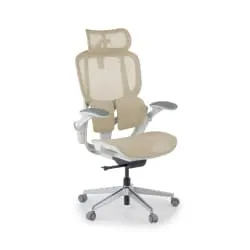
The good news is that small changes in how we sit, position the screen, support our feet or take active breaks can make a big difference. In addition, having a suitable chair and a properly adjusted working environment helps maintain a more natural posture for longer. If you are reviewing your workstation, it may be useful to consider a chair suited to daily use, such as ergonomic chairs.
In this article, you will find practical recommendations for improving your postural hygiene at work, preventing strain and creating a healthier routine both in the office and at home.
Article index

What is postural hygiene?
Postural hygiene refers to the set of rules, habits and recommendations that help maintain a suitable body position, both at rest and in motion. Its main aim is to prevent strain, reduce muscle tension and protect the spine during everyday activities.
Good postural hygiene does not mean remaining rigid, but rather adopting natural, balanced and comfortable positions. Correct posture should allow us to work, walk, rest or lift objects without causing excessive fatigue, pain or unnecessary tension.
In the workplace, postural hygiene is particularly important because many people spend much of the day sitting. Therefore, as well as taking care of your posture, it is advisable to check your chair, desk, screen height and the organisation of your workspace. You can find out more in our guide to ergonomics in office work.

Why is it so important?
When the spine remains in the same position for a long time, when physical effort is performed incorrectly or when awkward postures are maintained, the back can suffer. This can result in lower back discomfort, neck tension, stiff shoulders or a feeling of tiredness at the end of the day.
That is why maintaining good postural hygiene in everyday life is so important: when working, walking, driving, using a mobile phone, lifting weights or sleeping. It is not just about sitting “straight”, but about distributing loads properly, avoiding repeated strain and allowing the body to move naturally.
A healthy posture helps protect the spine and contributes to reducing the risk of pain and injury in the future. If you would like to learn more about posture in front of a screen, you can also consult our advice on how to maintain correct posture in front of a computer.

Office work negatively affects your back
Office work can affect back health when we spend many hours sitting without moving enough or when we use a chair that does not adapt properly to the body. Incorrect postures maintained for weeks or months can cause progressive discomfort, especially in the lower back, neck, shoulders and wrists.
Sitting for many hours is not, in itself, the only problem. What tends to cause the most harm is combining poor posture with a chair that offers limited adjustability, a desk that is too high or too low, a poorly positioned screen and a lack of breaks. That is why taking care of the working environment is just as important as correcting your posture.
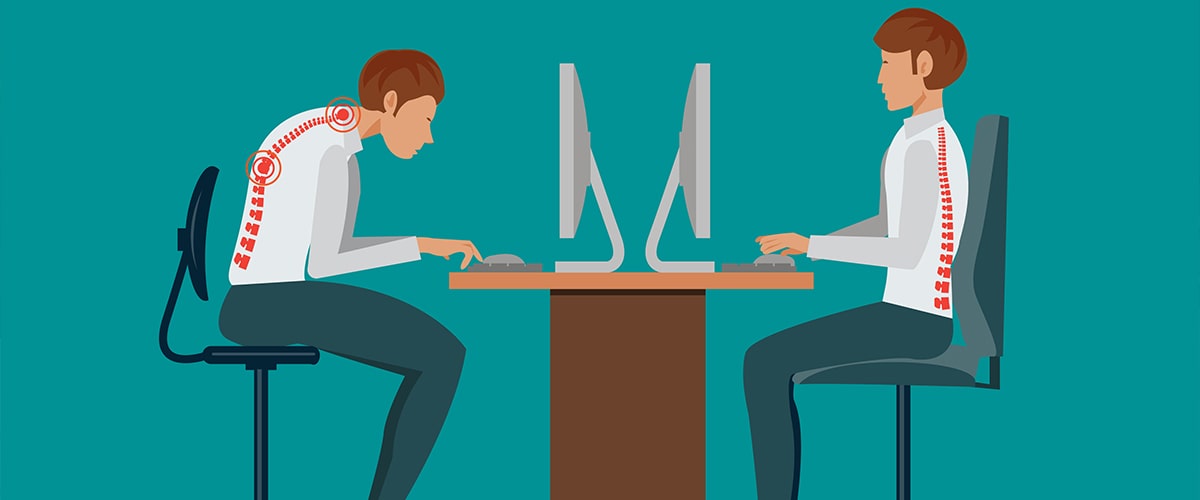
The seated position is not the most natural one for the body over prolonged periods. When we stand, the spine is better able to maintain its natural double “S” curvature. When we sit, this alignment can easily be lost if we lean forwards, slump in the lower back or move our head forwards to look at the screen.
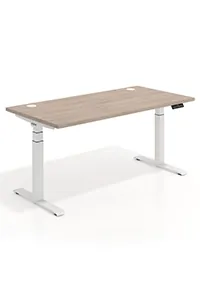
To avoid this, the workstation should be adjusted to the person, not the other way round. The screen should be approximately at eye level, the back should be properly supported by the backrest, the feet should rest on the floor or on a footrest and the arms should remain relaxed. A desk at the right height, such as adjustable office desks for comfortable working, also helps keep the shoulders and neck in a more comfortable position.

It is also important to position your legs and arms correctly to reduce muscle fatigue. As a general guideline, we should aim for a relaxed posture: back supported, head aligned with the torso, elbows close to the body and knees forming a comfortable angle. The feet should be fully supported, with the hips slightly above or at the same height as the knees.
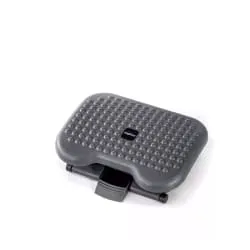
To achieve this, it may be necessary to adjust the chair height, adjust the backrest, change the distance from the desk or add foot support. An ergonomic office footrest can be particularly useful when your feet do not comfortably reach the floor or when the desk height requires you to raise the chair more than usual.
If you are considering changing your chair, make sure it is stable, comfortable and adjustable. Office chairs for daily use usually offer better adjustments than a fixed or decorative chair, which is important when working for many hours in front of a computer.
The office chair is one of the most important elements of the workstation. Ideally, it should swivel to allow movement without straining the back, be stable to provide safety and have a backrest that properly supports the lower back. It is also advisable for it to have adjustable armrests and castors suited to the type of flooring.
As well as choosing a good chair, it is advisable to change posture regularly and take short breaks. Standing up, walking for a few minutes, moving your shoulders or gently stretching your back helps reduce stiffness and improves your sense of well-being during the working day.
If you are unsure which features to prioritise before buying, you can consult this guide on how to sit correctly at work, where we explain how to position your body correctly when working while seated.
Postural hygiene exercises to prevent injuries
In our daily routine, we should get used to taking care of our postural hygiene in different situations, not only while working. These simple habits can help you reduce tension:
- When using your mobile phone, avoid tilting your neck downwards for long periods. Ideally, keep your head aligned and raise the device to eye level.
- When sitting, support your back against the backrest, keep your feet on the floor and avoid crossing your legs for prolonged periods.
- When standing or walking, try to keep your back upright, your shoulders relaxed and your head aligned with your torso.
- When sleeping, find a position that does not strain the spine. Sleeping on your back or side with a pillow between your legs can help maintain more comfortable alignment.
- To lift weights, bend your knees, keep your back straight and hold the load close to your body. Avoid twisting your torso while holding heavy objects.
To make adopting correct posture easier, you can incorporate brief exercises throughout the day. There is no need to follow lengthy routines: a few minutes of mobility exercises and stretching can help relieve tension and remind the body that it needs to move.
These exercises can help you improve your posture and reduce stiffness, especially if you combine them with active breaks and a properly adjusted workstation. For more practical advice, we also recommend reading these exercises to improve posture.
Remember that postural hygiene does not depend on a single action, but on a combination of good habits: moving frequently, adjusting your chair properly, positioning the screen correctly, supporting your feet and avoiding remaining in the same position for too long. With small daily changes, you can work more comfortably and take better care of your back.