




































 Shopping guides
 Help
 Log in

Ideal height of the work table
Article index
Determining the perfect height for a work table is not an easy task, as it is necessary to consider multiple factors that vary for each type of person. In other words, there is no ideal height for an office work table, which is why height-adjustable work tables have emerged as a great solution for all types of companies.
Therefore, whether you need to know how to adapt desks you already have in your facilities or if you are looking for the best height-adjustable tables for your workers follow our advice, we will tell you everything you need to know about this topic.
The importance of the height of a work table
The height of the work table is a fundamental aspect in any work environment, especially if a computer is used frequently or if manual tasks are performed, these require staying in a static position in front of a table for a long time.
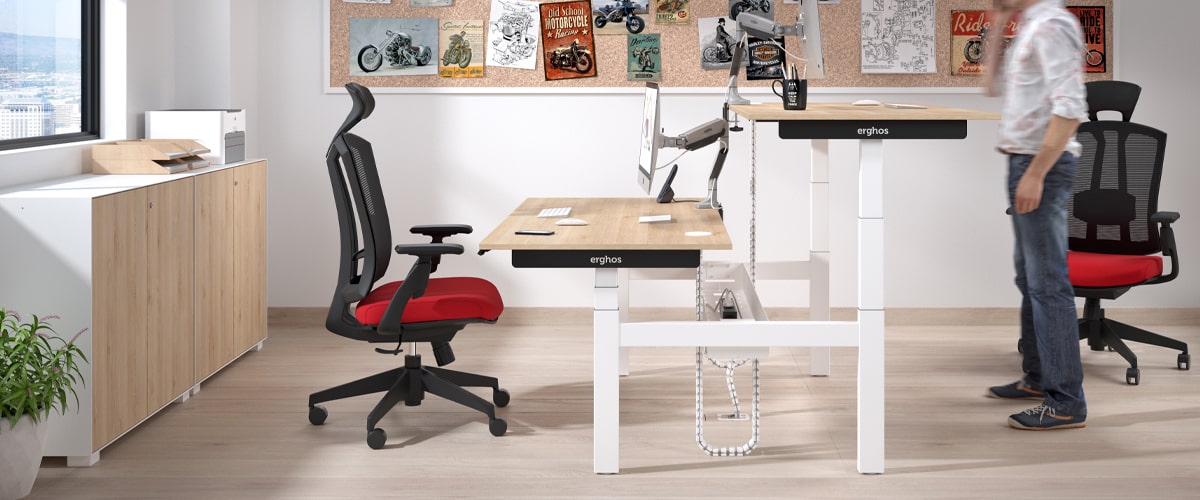
Office ergonomics is a key factor in ensuring the health and well-being of workers, and the height of the work table with a computer is one of the most important elements for improving efficiency of employees.
Below we detail some important aspects :
- Reduction of injury risk: A table that is too low or too high for the person who is required to use it for long periods can force the user's posture, which in turn can lead to the appearance of pain and injuries in the wrists, arms, shoulders, neck, and back. Moreover headaches can appear as well. In other words the right work table represents a significant saving in both, money and worries.
- Prevention of visual fatigue: The inadequate height of a work table can also affect the position of the computer screen, which negatively impacts the visual health of workers. Visual fatigue and headaches are the most common symptoms of using an office table at the wrong height.
- More productivity and efficiency: The correct adjustment of the work table height provides greater comfort and saves unnecessary interruptions. This allows for improved concentration among employees, as well as their attention and productivity, which translates into higher work performance and better resource utilization.
- Adaptability: Being able to adjust the height of the work table, or computer desk is essential in shared environments where different people may use the same space despite having very different body characteristics. An adjustable-height desk allows each worker to quickly and accurately adapt this piece of furniture to their needs.
What height should a work table be?
There is no appropriate standard height for a desk, but rather a recommended height for the work table based on various factors, such as the height of the person who will use it, the maximum and minimum height of the chair they will sit in, or the type of activity that will be performed on it.
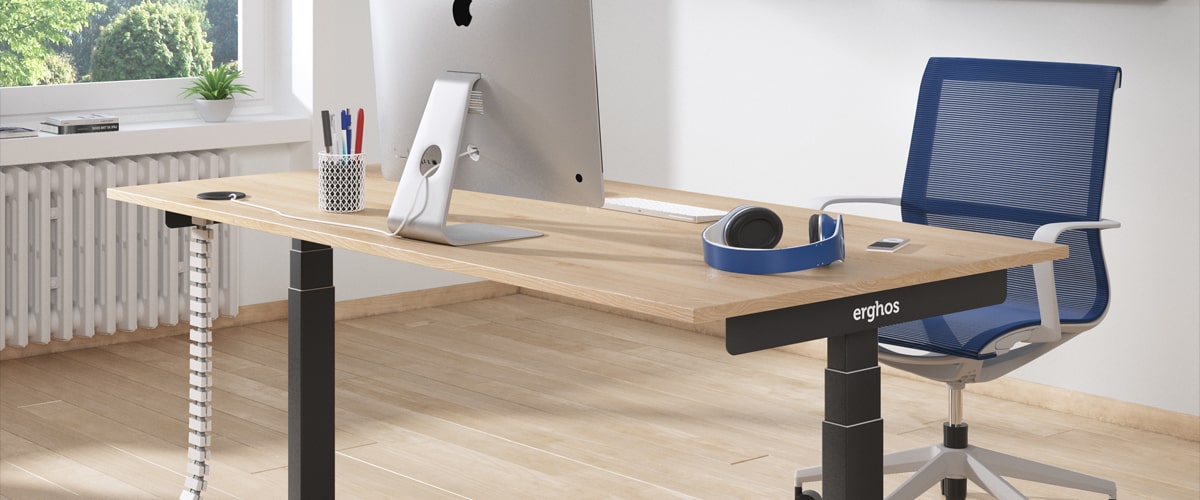
Height for seated work
- Standard: The typical height for a work table, such as an office desk, is approximately 70 to 75 centimeters from the floor.
- Ergonomic criteria:
- The elbows should be at a 90° angle, with the arms relaxed.
- The work surface should be at or slightly below elbow level when sitting with correct posture.
- It is essential to use an adjustable chair to adapt the position of the legs, feet (which should be resting on the floor or a footrest), and forearms.
Height for standing work
- General height: Varies depending on the specific task. A basic rule is that the work surface should be at elbow height or slightly below.
- Precision tasks (drawing, assembling small parts): The table should be about 5-10 cm above elbow height.
- General tasks (writing, light assembly): At the same height as the elbows.
- Strength tasks (crafting, cutting materials): 10-15 cm below elbow height to allow for greater leverage.
Customisation according to height
Since height varies among individuals, adjustable tables (whether mechanical or electric) are ideal for adapting to specific needs:
- For shorter individuals, a lower table reduces the risk of strain on shoulders and neck.
- For taller individuals, it is crucial that they can raise the surface to avoid leaning and developing back discomfort.
Additional tools
In the case of non-adjustable surfaces, they can be complemented with:
- Footrests: To adjust the effective height of the sitting position.
- Support stools: Useful on high tables to rest the legs during prolonged standing work.
How to check the recommended height of a desk
If only fixed desks are available in an office, it is difficult to achieve the recommended height for a work table.
The best trick to determine the optimal height for a desk or a computer table is to measure the distance from the employee's elbows to the floor while seated and with their arms forming a 90-degree angle in a writing position.
Sometimes an adjustable height chair will suffice to achieve the best combination, although it is quite likely that a footrest will also be needed to achieve a truly comfortable experience. However, if the height of the work table is adjustable, it can be adapted as many times as necessary, providing the best support for any type of worker, even if they are required to share their workspace with


