




































 Shopping guides
 Help
 Log in

How to heat an office efficiently
Article index
The appropriate temperature in the office is crucial for maintaining a productive and comfortable environment. A space that is too cold can negatively affect employees' concentration and well-being, while an excessively warm environment can lead to discomfort and fatigue. Therefore, understanding how to heat an office efficiently is essential for improving productivity and maintaining a pleasant work climate throughout the year. Below, we will explore some simple tips and the most effective methods for heating your office.
Simple tips for heating the office
Before resorting to expensive heating systems, there are simple tricks that can help you keep heat in the office. These tips improve energy efficiency and can contribute to the overall comfort of the space.
- Take advantage of natural light: During the day, open curtains and blinds to take advantage of sunlight. Sunlight provides warmth and can naturally heat rooms. This is especially useful in the mornings and on sunny days, reducing the need to turn on heaters. If your office also has a glass wall in modern offices, the use of light will be even greater.
- Seal air leaks: Cold air leaks are one of the main causes of heat loss in any space. Make sure that windows and doors are well sealed to prevent cold air from entering the office. Using weatherstripping on doors and windows can be a simple solution to improve thermal efficiency.
- Keep the heat inside: The materials that decorate the office also influence heat distribution. Placing rugs on the floor or large mats can help insulate heat and keep it inside the room. Additionally, strategically place furniture to block drafts near windows and doors.
- Dress appropriately: Don't underestimate the power of appropriate clothing to keep warm. If the workspace is cold, opting for sweaters and additional layers can improve comfort without the need to turn on extra heating.
- Use a foot heater at your workstation: If your feet are cold while you work, an office foot heater is an excellent solution. These devices provide direct heat to your feet without affecting the overall temperature of the office. Being energy-efficient, they are effective for localised heating.
Consider combining several of these methods and don't forget to invest in your ergonomic chair or other suitable furniture, such as our black desk chairs, to maximise your comfort while working in a warm and pleasant environment.
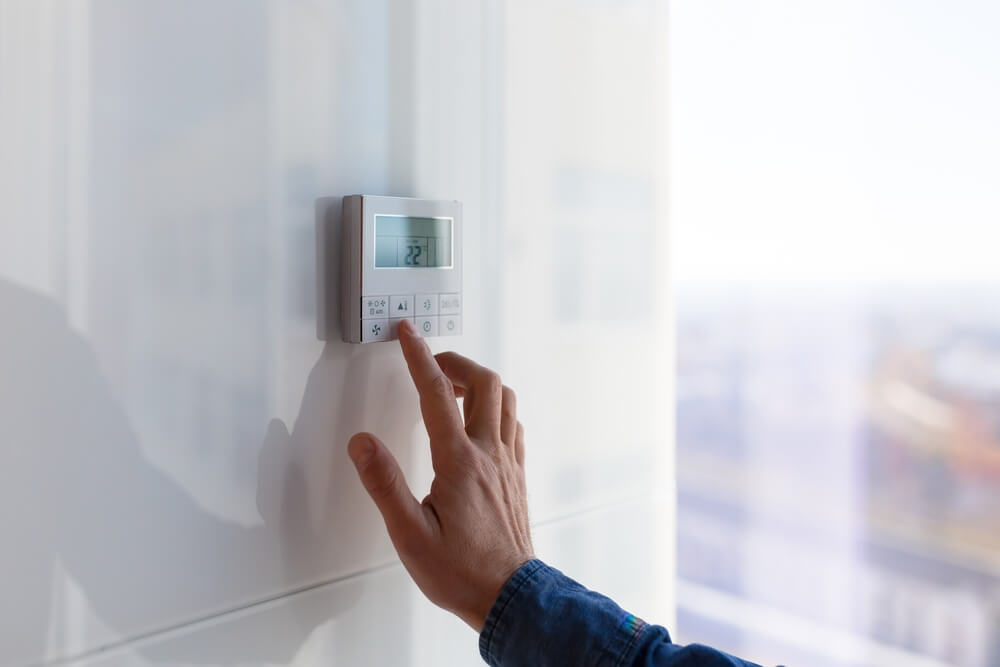
Most efficient heating methods for offices
There are several heating methods that cater to the specific needs of an office. Here we analyse the most popular ones along with their advantages and disadvantages:
1. Central heating
Central heating is one of the most common methods in large offices or commercial buildings. This system distributes heat evenly through radiators connected to a central boiler. It is effective for quickly and consistently heating the entire office.
Advantages:
- Constant and uniform heat throughout the space.
- Ideal for large offices or shared spaces.
Disadvantages:
- Can be costly in terms of energy consumption if not maintained properly.
- Not very flexible, as it cannot be adjusted independently in each office.
2. Underfloor heating
This method uses pipes or cables installed under the floor to heat the office efficiently. Although it is a considerable initial investment, underfloor heating distributes heat evenly and maintains a pleasant temperature for longer periods.
Advantages:
- Uniform heat distribution.
- Does not take up visible space, optimising the office's aesthetics.
- Energy-efficient in the long term.
Disadvantages:
- Expensive to install, especially during renovations.
- May take longer to heat a room compared to other systems.
3. Portable electric heaters
Portable electric heaters are an excellent option for heating small offices or specific areas within a large space. They are easy to move and can be used locally, making them perfect for individuals working alone.
Advantages:
- Quick and direct heat.
- Portable and easy to move.
- Low initial cost.
Disadvantages:
- Less energy-efficient in the long term.
- More than one may be needed for large or open offices.

How to heat a cold office without turning up the thermostat?
In summary, if you find yourself in a cold office and cannot raise the thermostat temperature, consider using more localised solutions. An office foot heater is ideal for preventing your feet from freezing while you work. Additionally, you can invest in a small portable electric radiator to heat your personal space.
On the other hand, using an efficient heating system, such as portable electric heaters, can ensure that the environment remains at an appropriate temperature without excessively increasing energy costs.


