
















 Shopping guides
 Help
 Log in

Why do your legs hurt when you stand up after sitting?
Causes, remedies and when to see a doctor
Have you noticed an uncomfortable sensation, stiffness or pain in your legs when you stand up after sitting for a while? It is a fairly common complaint and can have different causes. Sometimes it is due to a poor posture, a lack of movement or a chair that does not encourage a good position. In other cases, it may be related to circulatory, muscular or joint problems that are worth checking.
In this post we look at the most common causes of leg pain when standing up, what you can do to ease it and in which cases it is advisable to see a healthcare professional. This information can help you identify habits that could be improved, but remember that only a doctor can give you a proper diagnosis if the pain persists or gets worse.
Article index
Spending many hours sitting affects circulation, the muscles and the joints. That is why, as well as reviewing your movement habits, it is also important to pay attention to the type of seat you use every day. If you work many hours in front of the computer, we also recommend reading this article about why the office chair you use affects your health, which explains how a poor choice can influence your posture and wellbeing.

Possible causes of leg pain when standing up
The human body is designed to move. When we stay seated for a long time, some areas of the legs can become stiff or receive less circulation than usual. This can cause a feeling of heaviness, tingling, tightness or pain when getting up.
Lack of movement: Sitting for long periods can reduce blood flow in the legs and increase stiffness in muscles and joints. If you also do not change position often, the discomfort may appear more easily when you stand up.
Nerve compression: A seated posture held for too long can compress important nerves, such as the sciatic nerve, and cause pain or discomfort when changing position. Having a chair with the right dimensions helps to maintain a more natural posture, especially if the chair lets you adjust the height, backrest and armrests.

Joint problems: Discomfort in the knee while sitting can be a sign of joint stiffness or overload. The knees suffer especially when they stay bent for a long time, which is why it is common to feel some difficulty or pain when standing back up.
Misalignment or muscle weakness: Muscle pain when standing up from the chair can also be related to weakness in muscle groups such as the quadriceps, glutes or hamstrings. When these muscles do not work in a balanced way, standing up after sitting can require more effort and generate discomfort.
Incorrect chair height: If the chair is too high, the feet may not rest fully on the floor. If it is too low, the knees may be too bent. In both cases, the posture can encourage tension in the legs, hips and lower back.
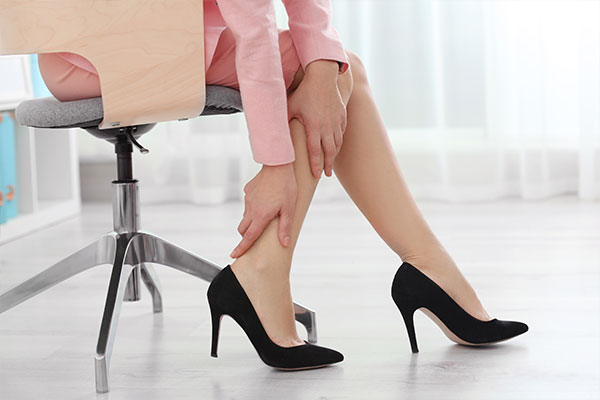
Remedies for leg pain when standing up from the chair
If the pain appears after sitting for a long time, there are several simple measures that can help ease the feeling of stiffness. They are not a substitute for a medical assessment, but they can improve your comfort day to day.
Frequent movement: Standing up and walking for a few minutes every now and then helps activate circulation and reduce accumulated tension. If you work seated, try not to stay in the same posture for hours on end.
Gentle stretching: Adding stretches for the calves, hamstrings, quadriceps and hips can improve flexibility and reduce the feeling of heavy legs. Ideally do them gradually, without forcing and paying attention to any intense pain.
Muscle strengthening: Doing strength exercises adapted to your level can help your legs, glutes and lower back better withstand sustained postures. A more active and balanced musculature tends to reduce the strain on the knees and hips.

A good chair at the right height helps a lot
Choosing a good office chair can make a big difference. Ideally it should let you adjust the height so that your feet rest fully on the floor and your knees form a comfortable angle. It is also good that the seat does not press too much on the back of the thighs, since that pressure can affect circulation.
In addition, a chair with good lumbar support helps keep the back better aligned. When the lower back is well supported, it is easier to distribute the body weight and avoid unnecessary tension in the legs, hips and lower back.
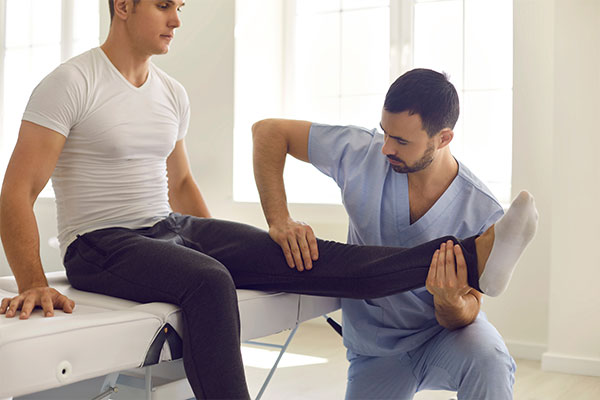
The importance of a proper diagnosis
Although changes in posture, stretching and a suitable chair can help, it is important to know when to consult a specialist. If the pain is persistent, increases over time, appears together with swelling, intense tingling, loss of strength or limits your daily activities, the most sensible thing is to see a doctor.
Some complaints may be related to circulatory problems, muscle injuries, joint disorders or nerve compressions that require a specific assessment. A proper diagnosis prevents the problem from dragging on and makes it possible to apply the correct treatment.
Forget about leg pain
Understanding why your legs hurt when you stand up after sitting is the first step to correcting habits and improving your wellbeing. In many cases, the key is to keep a balance between rest and movement, review your posture and use a chair that adapts correctly to your body.
If you work many hours seated, try to alternate short active breaks, gentle stretching and a suitable setup of your workstation. The height of the chair, the position of the feet, the lumbar support and the distance to the desk have more influence on daily comfort than it seems.
And if the pains persist, happen frequently or appear alongside other symptoms, do not let it slide. Consult a specialist to rule out health problems and receive a recommendation adapted to your case. Looking after your legs, your posture and your work environment is essential to maintain an active and healthy life.


