




































 Shopping guides
 Help
 Log in

Agile methodologies: what are they and their types
Article index
Have you ever heard of agile methodologies? In this post at Officechair365, we are explaining what they are, what types exist, and how you can apply them in your daily life.
If you work in a design, office, or project development environment, you have surely heard of "agile methodologies," or agile ways of working where there are a series of modes and steps to follow to make timely deliveries, keep the workflow up to date, and ultimately be more productive.
The truth is that agile methodologies gained popularity due to technological development, where as the Internet, mobile phones, and the use of apps emerged, it became increasingly necessary to maintain a constant and high work pace to satisfy the end user.
Hence the need to generate stable, constant, and useful workflows, which is what is achieved by using agile methodologies. Some are designed for digital environments, but others like Scrum or Kanban are applicable to different settings.
But let's go step by step:
What are agile methodologies?
Agile methodologies are standardised ways of working, with a rigorous step-by-step protocol where a project is divided into several smaller parts, thus facilitating faster deliveries and greater work efficiency.
In reality, agile methodologies are part of something called "the agile philosophy" that encompasses a different way of working and organising. It is precisely a different way of thinking, with certain key aspects:
- the user is always in focus, so a project is approached not only from the perspective of "the payer," but also from the utility it will have for society.
- tasks are assigned based on priorities, not urgency. This nuance is important because it requires organising in such a way that the most important issues are addressed without being interrupted by actions that take valuable time.
- communication is vital with clients and among the workers themselves. In fact, as we will see later, in certain agile methods like Scrum, the moments when the team meets to discuss whatever is necessary are called "ceremonies."
These points, and many more, are included in the famous "agile manifesto", which also emphasises elements such as delivery speed, purpose, etc. The ultimate goal of using these types of work methods is to be more productive and adapt to changes easily.
Types of agile methodologies
Diving deeper, we present below the most famous agile methodologies:
Scrum
This is the most widely used methodology today, although it is also one of the most complicated.
A work team is designated from the beginning, with a product leader, a coordinator, and a team.
From there, the goal is to define from the start what needs to be done on a list. From that list, the highest-priority tasks are selected, and a specific time period is chosen to complete them (it will never exceed two weeks). This is known as a sprint. During this sprint, the workflow cannot be interrupted, and no new tasks can be introduced until the designated ones for that time period are completed.
In this methodology, communication is given great importance, so team meetings are called "ceremonies" to highlight their relevance in this method. Thus, these ceremonies take place both before, during, and after completing the project, so there is constant monitoring, and if necessary, priorities or tasks for the next sprint are re-evaluated.
Scrum is more common in environments with very large comprehensive projects, but it can be adapted to many areas of teamwork.
Kanban
The Kanban methodology, unlike Scrum, is one of the easiest to follow, applicable even if you want to be more productive on an individual level and can be perfectly used in your personal environment.
Kanban is based on a board that you must divide into three parts: tasks to be done, in progress, and completed. This, of course, is the base; depending on the nature of your work, you can add more parts. For example, if you work in journalism, you can divide it into:
- articles to be done;
- research;
- draft;
- editing;
- publication.
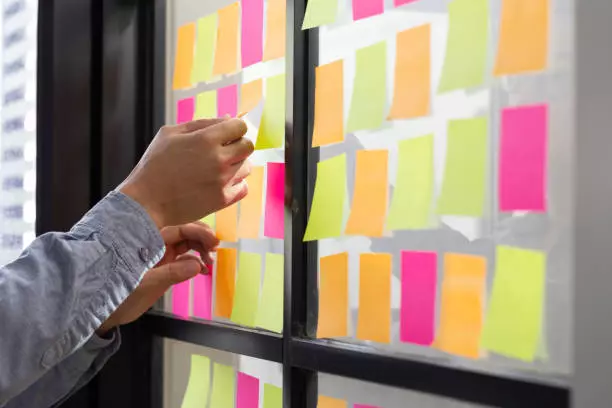
It is a highly adaptable methodology to multiple environments, you just need to grab a pencil and paper and draw three columns in the context that you need: personal, at work, in the house, etc.
The key is to not leave too many tasks in the "in progress" section (ideally no more than three) and to maintain a constant flow of activities. The goal of this method is precisely to keep an active work pace, so that what you start, you finish. Hence, the board is the format used: if you see it laid out in front of you, you will be more likely to complete what you have started.
Design Sprint
This is the methodology used by Google, which basically consists of 5 days of intensive work where the goal is to address a single project comprehensively, solving the most immediate problems of it. After those 5 days, you should come out with a proposal or product in hand that can be used immediately.
Did you find agile methodologies interesting? Remember that at Officechair365 we are experts in office furniture, gaming, and ergonomic solutions to contribute to productive work environments.
Visit us now on our Officechair365 website, don't miss our offers!


