




































 Shopping guides
 Help
 Log in

Characteristics that a work chair must have
Article index
- Essential features of a work chair expand_more
Working for hours in front of the computer can have health consequences: back pain, vision problems, discomfort in the neck, arms, and legs and so on. That's why it's very important that the office chair is of the highest quality. What features should a good chair for working have? Discover the qualities that will improve your posture and your health while you work.
Essential features of a work chair
We shouldn’t take the choice of our work chair too lightly because we spend many hours sitting in it throughout the day, doing acivities that are not always relaxed.
Back pain has become one of the most common health problems among those who work in an office, and that's why we must choose the best office chair for ourselves.
In general, it is recommended that this chair be ergonomic because it offers a series of features that other office chairs do not have. What are the characteristics of an ergonomic chair?
- Adjustable seat height and depth.
- Reclining backrest.
- Design that adapts to the body's shapes.
- Materials that promote breathability.
Therefore, what characteristics should an ergonomic chair have? Ultimately, it should adapt to the body posture to provide a better user experience, ensuring comfort, ease, and space.
For that work chair to be certified, it must comply with standard regulations that make it an efficient and recommended chair for use. This means that the chair's design must fit the characteristics of each user and meet a series of conditions established according to the criteria of the UNE-EN 1335 standard.
Adjustable seat height and depth
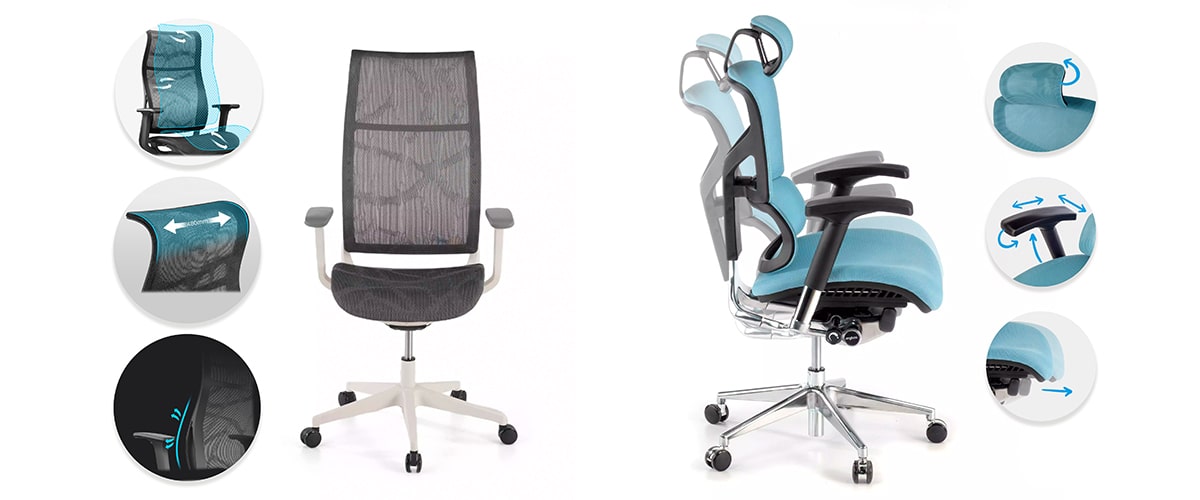
The first essential feature of an ergonomic chair is that the seat is adjustable in height and depth.
It is essential that the office chair allows not only for the correct posture but also for changes in posture when needed, as this will prevent future back pain.
How to adjust the height of the chair? It should allow the user to place their feet flat on the ground and for the hips and knees to be positioned at an angle of between 90º and 100º. Additionally, the chair should not hit the desk.
Regarding depth, ideally, there should be a free space of at least three fingers between the edge of the seat and the back of the knee to avoid pressure on legs, as this can cause blood circulation problems. Of course, the longer the femur, the more depth the user will need in the chair.
Reclining backrest
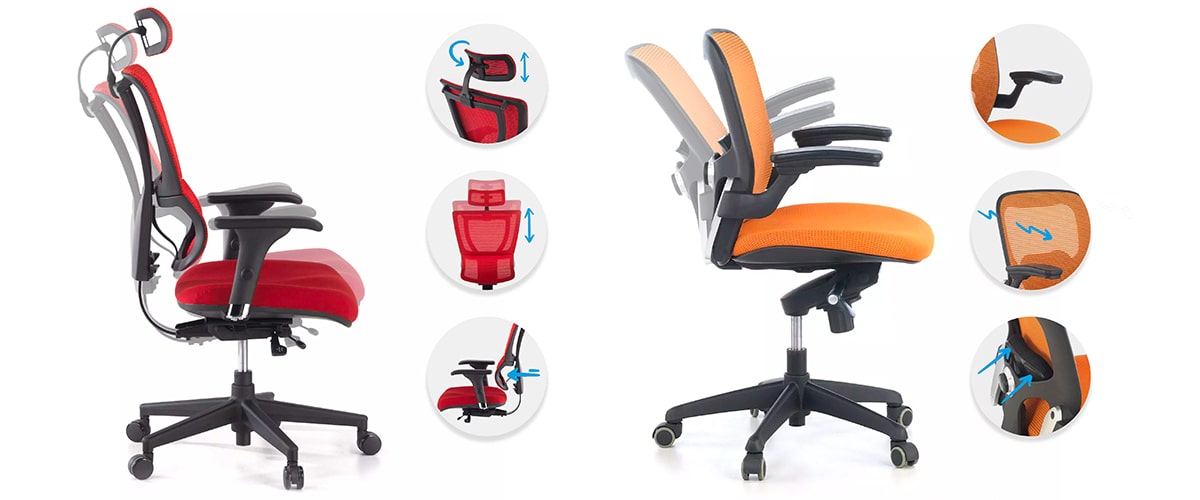
Another essential feature of ergonomic office chairs is that the backrest is reclining. The user should be able to adjust the tilt of their seat at various points, allowing them to relieve tension in their back when needed.
The correct posture is the one that does not leave any inclination, meaning that the seat should be flat or have a slight forward tilt to keep the pelvis in the most natural position possible. To avoid discomfort in the lumbar area, it is advisable for the backrest of the chair to be at an angle of about 90º-100º to the seat. This will provide sufficient support for the spine.
However, if the chair allows for rocking, it will help the user relieve tension. Being able to tilt the chair between 120º-130º will allow the person sitting in it to recline and stretch when they need to relieve tension in their back.
Design adapted to the body
Ergonomic chairs should also have a design that adapts to the shapes of the body. This means that, to keep the spine aligned and the lumbar area protected,the chair should have a slight lumbar prominence, which will provide stable support and keep the back in a more natural position.
But not all backs are the same, and obviously, companies cannot purchase custom-made chairs for every employee. Therefore, a good office chair will have some accessories (like a cushion) for the backrest that allow for the height and depth of the lumbar prominence to be adjusted based on the needs of each user.
It is also recommended that the seat has a medium-high firmness (better than a soft seat) and that the edge of the seat has a certain inclination to avoid pressure on the legs and promote good blood circulation.
Breathable materials
Finally, it is also essential that a good ergonomic chair is made from breathable materials. In general, mesh or a similar material is most suitable, as it promotes user comfort.
If the worker feels hot or starts to sweat, they will not be as productive. Additionally, it is also unpleasant for anyone to have their back or buttocks in contact with non-breathable surfaces for several hours. Therefore, this aspect is also fundamental when choosing the best work chair and it should not be overlooked!


